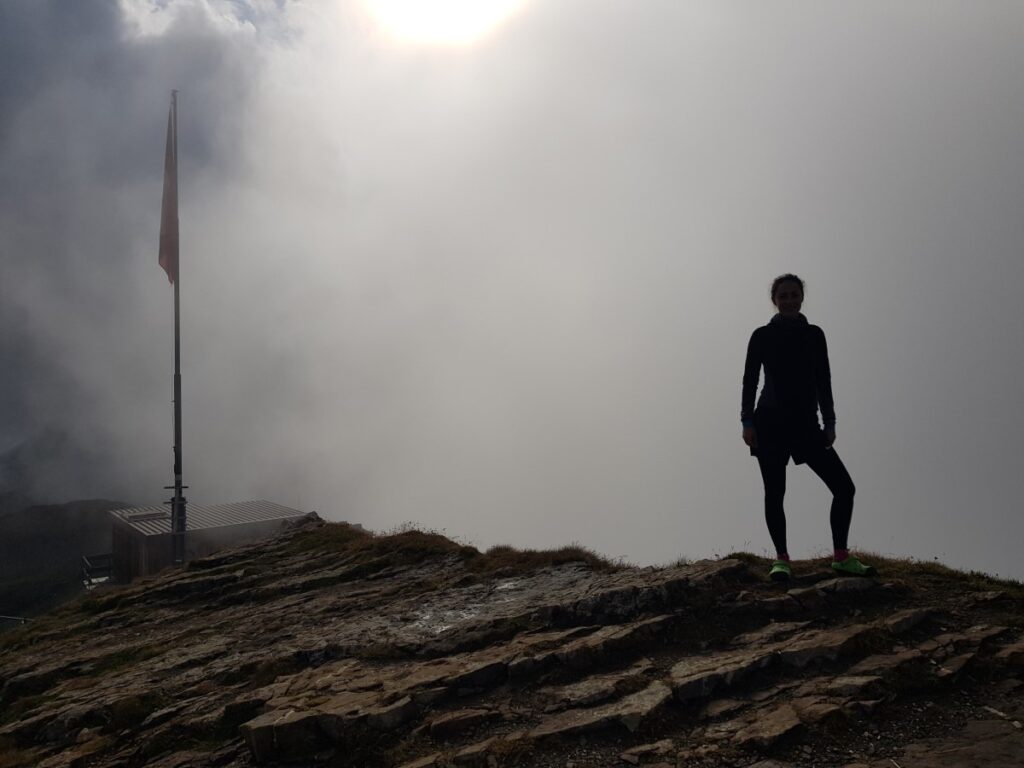
I was never someone who could stick to a training plan. Establishing consistent routines never came easy to me. I tend to procrastinate and leave things to the last minute. Of course, I was somewhat overwhelmed when I received the message that I won a starting slot for my first Ultramarathon. Where do you even start with the preparation for such an endeavour?
As you can read in my first ever blog post – “Embarking on a strange journey…“- I had no experience in how to train for longer distances (51 km), with a significant amount of vertical gain (a total of 3100m of vertical gain and loss). So, what do you do if you have no clue? Start googling “how to train for your first ultramarathon”.
Where to start
I read many blog posts, watched a bunch of YouTube videos and downloaded a good number of free training plans from different sources as a starting point. Pretty much all training plans I saw prescribe at least 5-6 days of running every week with very complicated speed sessions mixed with longer runs. At the same time, a lot of the articles or video blogs recounting the training experiences from other ultramarathon beginners were full of stories of overuse injuries during the training phase and not feeling 100% healthy on race day.
All that information was really helpful because I realized that I needed to reflect on my goals before I started to plan anything and that I needed to understand more about the physiology and science behind different training approaches to make smart decisions for myself.
Setting my goals
Since I had no reference point for how long it might take me to finish the race, I had to think about other ways to set goals and measure success. I briefly touched on the three main goals I came up with in the race report I posted. However, I want the give a bit more background on my reasoning behind each goal since it ties into my overall training approach.
- Finishing the race – For me this meant to be physically and mentally prepared for the whole journey. This goes beyond pure training and mental toughness but also spending enough time on preparing for the logistics and material to do the prep and the race justice. Everything must come together in the end.
- Don’t get injured during training or the race – This was a big one for me. Especially after reading and hearing about many stories of potentially preventable injuries during the training process or during the race. My goal was to listen to my body and train as smart as possible to achieve my first goal. I didn’t want to just blindly follow a training plan which might push my body way beyond what would be sustainable for the fitness level I was at.
- Be happy during the race – This goal was not there from the beginning, but it almost formulated itself during all the training sessions during which I felt horrible and was less than confident about my training approach. Being able to see value in the hard parts of this process, enjoying the moment and being thankful for where I was and how far I’ve come was key to overcome these tougher moments.
Training principles
After doing a lot of research endurance training and completing a VO2max test to assess where I truly was at with my overall fitness, I put the following basic principles at the core of my training (and stuck to them until the end).
- One long run each week, no matter what!
- Time on feet over intensity
- Continuous strength training for the whole body
One long run each week, no matter what! I hope that probably most endurance junkies would agree, the long run should be top priority whilst training for an ultramarathon. I put the long run at the centre of my training, committing to one long run per week. If everything fails and life comes in the way of your training plans this long run will happen, no matter what! I tried to pick out new and exciting routes as often as possible. At the same time, I also established a “base loop” which I could do starting at my front door and was the minimum requirement for the long run (approx. 20 km and 900m of vertical gain). Establishing this loop as baseline really helped taking any thinking or finding any excuses out of the equation. It was possible to complete in any weather, even with heavy snow and still provided good variety in steepness and terrain. The goal for the long run was always to do an easy zone 2 training effort to work on my base fitness. Choosing a route that is like the terrain of the race obviously also helps preparing your body to that specific stress.
Time on feet over intensity – This principle is probably more important if you are a beginner at very long distances (like me) and your body has not yet completely adapted to a training load of running 5-6 times a week. Since I had to assume that I potentially was going to be out there for up to 14 hours, it was clear that getting used to being on my feet for an extended period of time would be crucial. Probably more so than doing speed or interval sessions. To incorporate “time on feet” I highly recommend hiking. I purposely planned a long mountaineering tour in late June to have a low impact but very long training session. This allows you to incorporate a bit of variety into your training and makes it a bit more social.
Continuous strength training for the whole body – Having strong muscles to protect your joints and a strong core is very important to being able to sustain hard training efforts over an extended period of time. I was already bouldering once a week with my friends anyways and since bouldering is not only a lot of fun but an excellent upper body and core workout at the same time, I continued with it. In addition, I created an easy at home body weight strength training routine which only takes 20 minutes to complete (no excuses).
Stick with it
I would lie if didn’t admit that I had many doubts about my training approach, but I think that is part of the game. Being able to deal with ambiguity and overcome doubt is part of the process to become a better version of yourself. At the same time having a very easy and straightforward training plan helped me not to feel overwhelmed by the task at hand. Will this training approach help me to tap into my full potential as an athlete? Probably not, but it helped me achieve all my goals I set out to achieve and I’m proud of that. Going forward and into the 2020 season I want to learn more and keep improving my training to become a better athlete.
Pingback: VO2max test for an amateur endurance athlete – my experience… – Make It Worthwhile
Pingback: Race report Eiger Ultra Trail 2021 E35 – running under the Eiger north face… – Make It Worthwhile