Running your first ultramarathon not only requires a lot of training but also a lot of planning to ensure you have all the gear ready. Depending on the race it can vary greatly what you are required to carry as mandatory gear. In this post I will list and review all the gear I was carrying during my first ultramarathon experience the Eiger Ultra Trail 2019 E51.
I will also show my running outfit and shoes I chose for the day. Before we jump in here are a few things to consider when putting together your gear:
- No experiments on race day – This is probably the nr 1 tip you read everywhere regarding running gear and nutrition for race day. However, in my opinion this also applies to your mandatory gear. Especially during very long races even minor inconveniences can become a major annoyance (like an annoying hand strap on your trekking poles or sunglasses that start pinching behind your ears).
- Fit for purpose – Particularly for races in mountains at elevation part of the mandatory gear usually is a change of clothes or added warm layers in case of a significant drop in temperature or bad weather. It makes sense to assess whether the gear you are packing does not only meet the minimal requirements of the race guidelines but also serve its purpose to keep you save and healthy.
- Make a test run – A fully loaded race pack is usually much heavier and more tightly packed than what I would carry during a training run. Ensure you plan for at least 2-3 practice runs with a heavier pack (we usually carried more water than required during our training runs anyways) ideally in your planned race set-up including poles on the pack if you don’t plan carry then in your hands for the whole distance.
My running gear
Let’s get into all the gear I was carrying on me during the Eiger Ultra Trail E51. For a full list of the mandatory gear required you can visit the website of the Eiger Ultra Trail. I will add links to the mentioned or a similar items if I can find them*.

- Salomon Adv Skin 12 Set (2018) – Very nice running pack with a lot of room for storage and good fit. I’m wearing a size XS/S which fits nicely however when fully loaded with a filled hydration bag and trekking poles attached it can get a bit tight.
- Rain Jacket from Mammut – This is an older model, but I like it a lot since it is very light weight but still protects reasonably well against rain and wind with the DRYtech Premium technology.
- Salomon Lightning Pro LS Hoodie – Very light long sleeve shirt which just fulfilled the minimum requirement of 150g. If the weather forecast was significantly colder though I would have opted for a warmer layer.
- Salomon running tights – Warm yet still lightweight tights which I used for training during the colder months.
- Mammut Astro Gloves – Basic wind stopper gloves I frequently use for high alpine mountaineering. Very good protection against cold wind and on rough surface, not so good in wet conditions though.
- Rescue blanket – This came with the Salomon hydration pack mentioned above.
- Dynafit headband – Since I was also wearing a cap during the race this wasn’t a required item, but I still brought it in case I didn’t want to wear the cap anymore and still have something to stop the sweat getting into my eyes.
- Reusable soft cup – Great solution for remote aid stations and helps cut the waste produced by these events tremendously. Should be the golden standard in all running events.
- Salomon Soft Flask 500ml – These also came with the hydration vest and are very easy to use and refill during the race.
- Salomon Soft Reservoir 1.5l – I debated a lot if I should even bring this since it is clearly not as easy to refill as the two Soft Flasks. However, since there is a pretty long stretch during the Eiger Ultra Trail E51 during which you can’t refill your bottles (not even with water) I decided to bring it anyways. We started the race with only the Soft Flasks filled and then at the last aid station before the long stretch without refill, we filled the Soft Reservoir with electrolyte drink. This strategy worked out very well and we didn’t have to worry about running out but also did not have to carry all the weight through the whole racecourse.
- Winforce Ultra Energy Concentrate (Mango & Salty Peanut) – I’m not a huge fan of gels but since Winforce was the official nutrition sponsor of the event and I have some trust in this brand regarding ingredients I ordered two flavours to try out. I liked the Mango and did eat some during the race, the Salty Peanut however I’m not a huge fan of. Not sure why I even brought them.
- Clif bar (Crunchy Peanut Butter) – This was my solid food of choice because they taste good and contain a good number of calories including some fats. Even though after a while they get a bit difficult to eat, with a few sips of water they still go down well enough and don’t disturb my stomach.
- Piz Buin Sunscreen – I put on sunscreen in the morning and did not reapply any during the day. Still a good thing to carry just in case.
- Vaseline – The tiniest pot of Vaseline I ever saw. It’s the lip care version but works just as well against chafing. Again, I did apply some in the morning and did not have to reapply during the day. Still definitely worth carrying if you are prone to chafing.
- Compeed blister plaster – I did not expect a lot of blisters since my feet are not very prone to get them and I’m not so sure how well these plasters would have held up during this race anyway. More a mental thing to have them available just in case.
- Beach Mountain Sunglasses – Bring some sunglasses that you can wear for hours without them getting uncomfortable. Unfortunately, I did not bring a little band that goes behind your head so after a while these started sliding down my sweaty nose which was a bit annoying and completely my own fault.
- Garmin Fenix 5 – I bought this watch at the beginning of my training block for this event and I really like it. The battery held up perfectly and the altimeter is very useful for mountain races with a lot of vertical gain and loss.
- Black Diamond Distance Carbon Z – I was not sure if I even wanted to use trekking poles. For our intense training week in Chamonix I still bought a pair to see how it feels especially on very tired legs. After that training week I decided I’ll bring them for the big climbs to help take some of the load off my legs but also help me with a good upright posture for easier breathing.
My running outfit
As excessive as the gear list looks, my running outfit was pretty minimal.
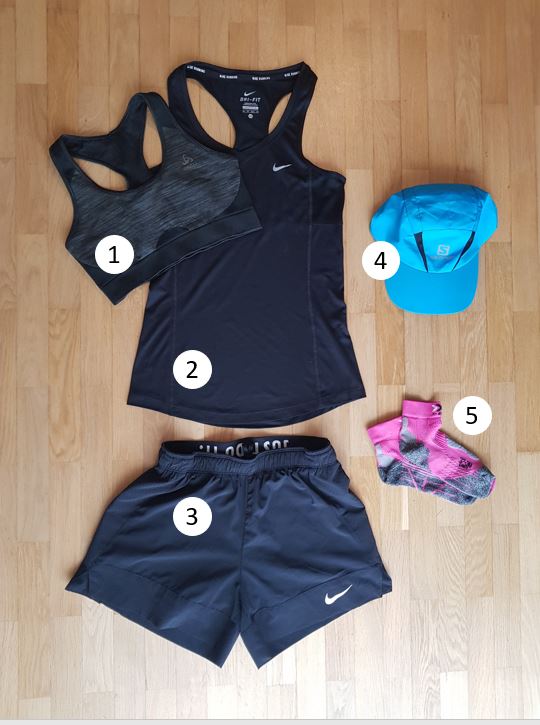
- Odlo Seamless Medium Sports Bra – Great no frills sports bra for women who don’t need a ton of support but still want to feel secure and don’t want any unnecessary parts or seams to minimize potential for chafing.
- Nike Dri-FIT Shirt – Very basic but comfortable shirt with no unnecessary seams which could become irritating after a few hours.
- Nike Dri-FIT Shorts – Very comfortable and lightweight shorts that still hold you in with the build in legs and are not too short.
- Salomon XA Running Cap – This was the only piece of equipment I did not try out before the race because I bought it at the exhibition. No risk no fun.
- X-Socks running socks – Great socks, wore them to death.
My shoes
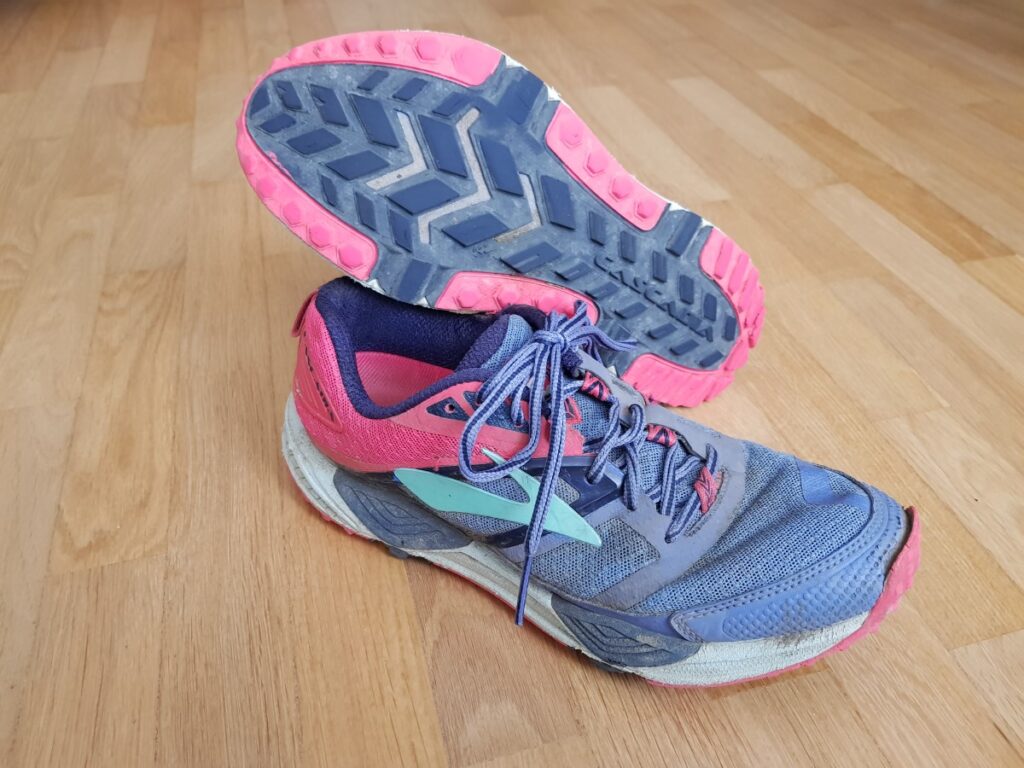
Runners are usually very particular about their running shoes. Here are my two cents on that. My first pair of trail running shoes were the Brooks Cascadia 12 and I loved them. I loved them so much that I ran the grip to the ground, so I had to by a new pair of trail running shoes about two months before the race. And what did I do? I bought another pair of Brooks Cascadia (12 was no longer available so I went for the 13 version). Even though the Brooks Cascadia 13 does feel a little different the basic shape and grip of the sole is still the same. If anything, the newer version does feel a bit lighter and a little more streamlined.

I’m obviously still a beginner at this long distance running but I still hope this was interesting and maybe even useful to someone.
*As an Amazon Associate I earn from qualifying purchases.