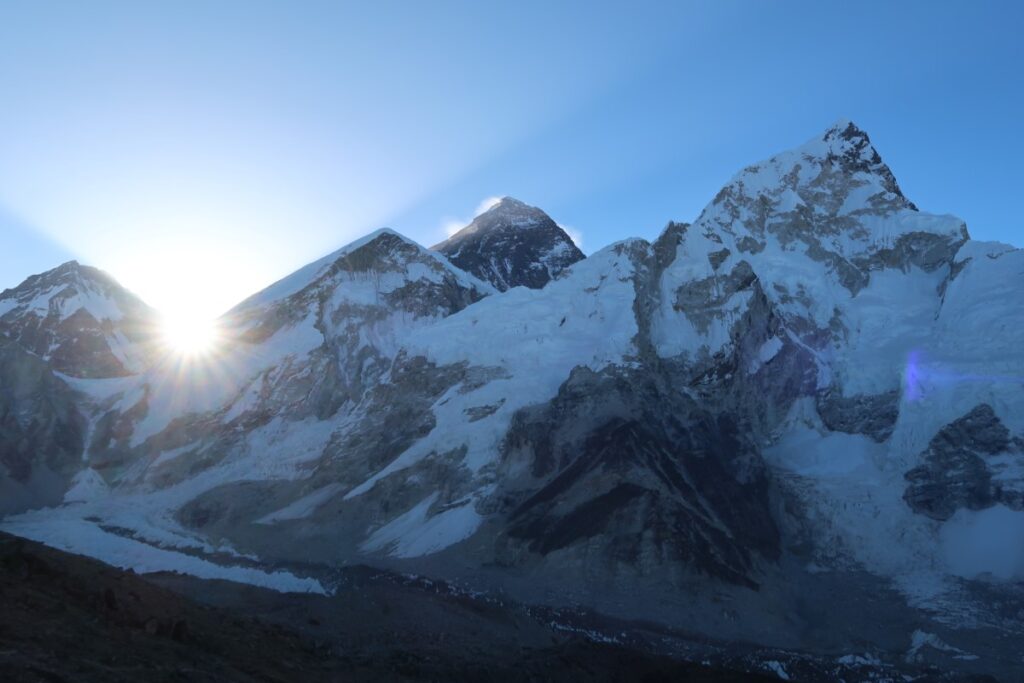
For me the Himalayas in Nepal is a magical place and it’s not for everyone. With this post I’ll kick off a mini series about my two (very distinct) trips to the Himalayas in Nepal. This is not a day-by-day recount of the first trip. It’s more so a reflection on what trekking in Nepal can be like and I share some hopefully useful tips, in case someone is planning their own trip to the Himalayas in the future.
How I ended up in the Himalayas in the first place
In early 2018 my husband and I were planning our vacation. We both were craving some adventure and our theme for the year was vertical gain. I searched through various travel websites looking for some inspiration and I found an add for a trekking in Nepal to the Everest Base Camp. I was intrigued and turns out, this is actually a very popular trekking route and the optimal weather window for travelling there was approaching. The flights to Kathmandu were very reasonably priced and so we just went for it and booked the trip.

What to expect during the trek
There was this running gag during our daily briefing with our guide, he always said the next stage of the trek will be “Nepali flat” – which means not flat whatsoever. The trek typically starts in Lukla, where the only commercial airport in the Khumbu region is located. From Lukla to the Everest Base Camp the hiking trails are fairly well maintained but they are not flat (obviously?). Every step you’ll take will either go uphill or downhill. Now, this seems to be a very conspicuous observation, since you are in fact in the Himalayas. However, there were a good number of fellow travelers that seemed to be a bit surprised by this.
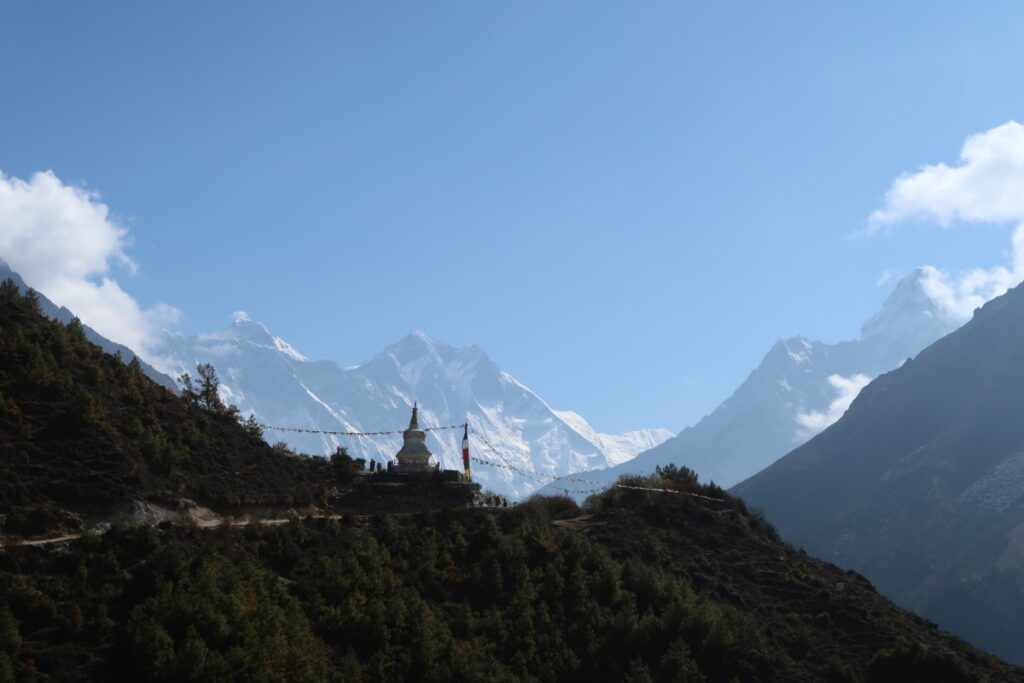
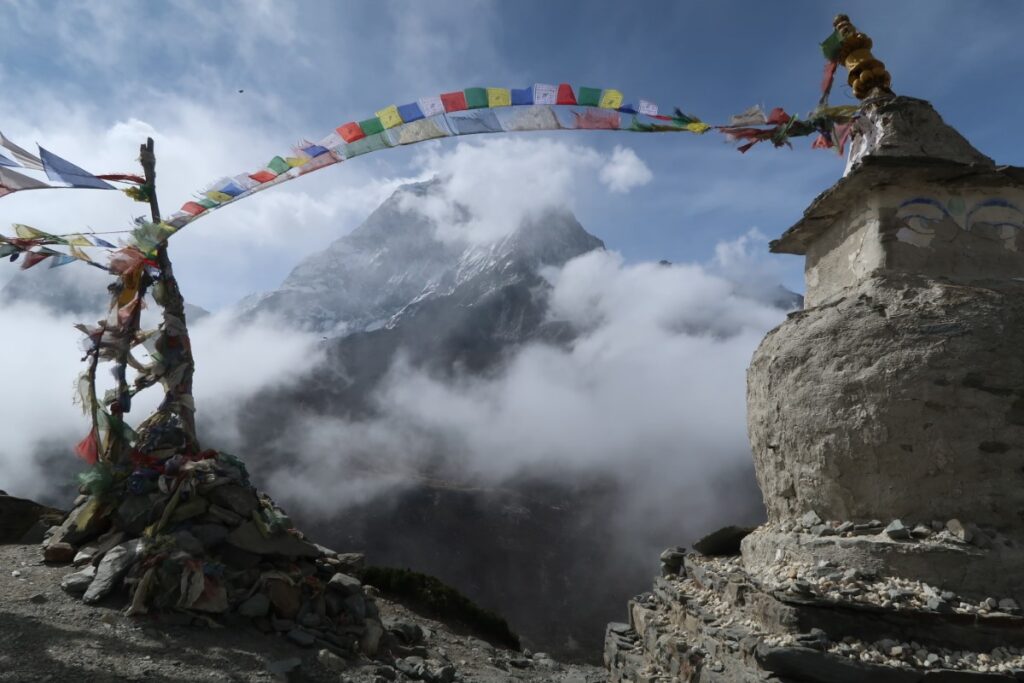
Nonetheless for every step you take, you will get rewarded with a never ending stream of breathtaking views and new adventures, such as crossing many suspension bridges along the way. The further up you go, the more dramatic the mountains surrounding you become.
Fellow travelers – the good, the strange and the out of place ones
You will meet every type of person imaginable on this trek, which can be a wonderful experience. We were part of a fairly diverse group of people considering age and fitness level. Luckily, almost all of our fellow travelers had a great mindset and were pretty relaxed. Since you are supposed to walk very slowly anyways (more on that later), to me it was not an issues at all, that some of the fellow travelers needed a bit longer to hike the trails than others. More time to enjoy the views!
Still you can’t forget, that most people will be far out of their comfort zone for more than two weeks at a time and people react very differently to this new situation. People arrive in Nepal with very individual goals, ambitions, expectations and reasons why they chose this trekking. This mix requires a good portion of tolerance and consideration from each individual.
Food and accommodation
Talking about food and accommodation, for me is a very complicated topic, as it shows why this trekking is not for everyone. It is complicated, because people sometimes come with expectations disregarding the fact that they are in a very poor country, in a very remote area with a increasingly fragile ecosystem. I’m a big believer in making reasonable choices without compromising on your personal well being, safety and most importantly your health. At the same time it is our privilege to travel to this country and not our right, therefore it is our responsibility to be a reasonable consumer and to decide beforehand if we are willing and able to do without certain luxury.
Accommodation is usually very basic, with small rooms that are not heated, shared toilets (sometimes western style, sometimes not) and one big common room with an oven which burns dried yak dung. There are more “luxurious” choices available but I think as a traveler in this country, it is very important to reflect on the environmental impact this has and if it’s actually worth it.
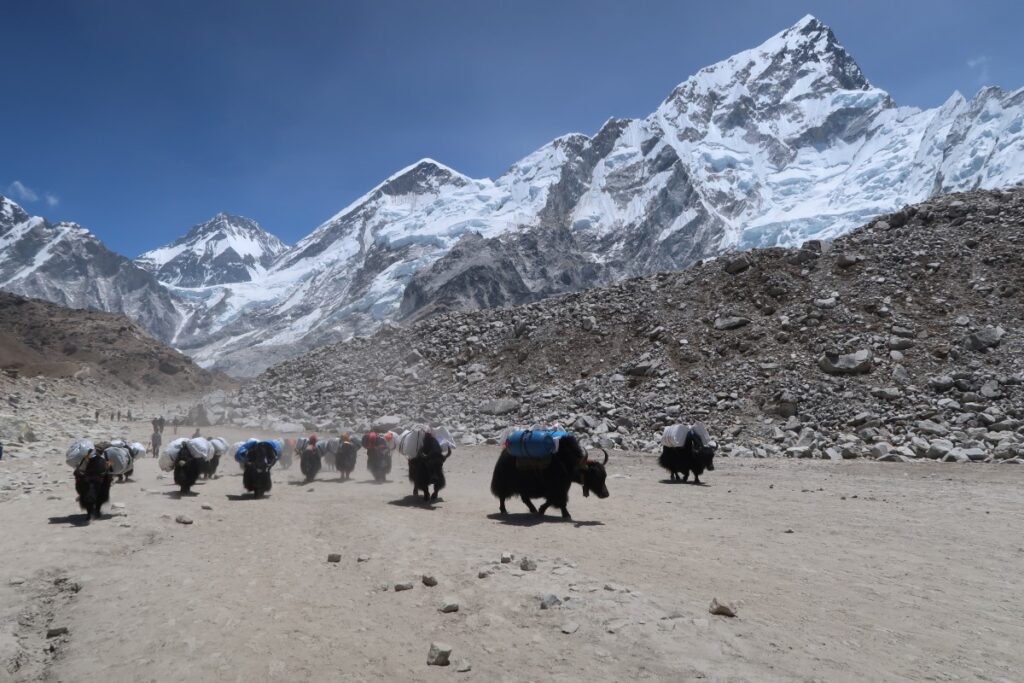
The menu looks pretty much the same in every tea house. Remember, everything you consume has to be transported either by mule, yak or on the back of a person. So naturally choices will be limited. Food safety can be a concern but is easy to navigate, in my opinion. It’s better to stick to cooked food, based on ingredients that can either be stored easily for a long time (toast does not fall into this category), can be obtained/ grown in this region and don’t require continuous refrigeration. I personally would keep away from meat completely, it’s just not worth the risk.
It is important to keep in min, that you will expend a lot of energy during this trekking, not only because of the daily hiking but also because of your body’s continuous adaption to the increased altitude. Therefore it is important to think about what you are eating throughout the day to sustain and replenish your energy. My ideal meal plan looked as follows:
- Breakfast: Porridge with some sugar and a black coffee. This will give you a good base and sustainable energy for the morning. It also helped me to warm up in the morning. If you tend to sweat a lot when hiking, you could also add a little bit of salt to the porridge.
- Lunch: For lunch I pretty much rotated between veggie fried rice or veggie fried noodles. Both usually come as pretty large portions and you have the option to add egg for additional protein.
- Dinner: After a long day of hiking and being outdoors, I usually was craving something salty. Therefore I often had either a vegetable or garlic soup as a starter and then either veggie Momos (Tibetan dumplings) or Dal Bhat, the traditional Sherpa meal with rice and lentils.
I highly recommend to bring some easy to carry snacks with you. This will help you to refuel between meals and will also add some variety to the somewhat monotonous meal plan. You do find a selection of convenience foods, soft drinks and alcoholic beverages at many tea house. Keep in mind that (plastic) waste is a very big problem in this region. Every single piece of packaging and every bottle will be either burned in an open fire or will end up in a landfill. So if you bring snacks, take the wrapper with you and dispose of it properly. This leads to another very important topic: Water.
Water is not safe to drink directly from the tap, even though it is fairly clear and has no bad taste at all. The water either needs to be boiled or purified by some other way. Bottled water is available but I would highly discourage you to buy bottled water, since it is one of the biggest contributor to the plastic waste problem in this region. I usually drank tea in the tea houses (go figure!) and we brought a small water filter to fill our bottles for the day. The rest of our trekking group used water purifying tablets and SteriPens.
How I dealt with high altitude
I kind of feel the need to make a disclaimer here, that I’m not a doctor or medical professional, so I can only share my personal experience and observations on how to deal with high altitude! There is a lot of information online on this topic and it’s always a good idea to consult your doctor if you have any questions.
Right after I booked this trip, I started to do a lot of research online on the effects of high altitude on the body and how to support the adaption process. The Everest Base Camp on the Nepal side is at 5364 meters, which is an altitude that has to be taken seriously. If you start the trekking from Lukla at 2860 meters you have a very good starting point for the acclimatization journey. However depending on where you live, even at 2860m you will feel the effects of higher altitude.
According to all the information I read, there is no direct correlation between your physical fitness and whether you will experience symptoms of high altitude sickness or not. However if you experienced high altitude sickness, or any symptoms related to high altitude in the past, you are more likely to experience similar issues again. Luckily my husband and I both had a no issues with adapting to the higher altitude throughout the whole trekking. We both had experience with mountaineering above 4000m but never above 5000m. We simply stuck to the following rules and I’m convinced that this helped us tremendously.
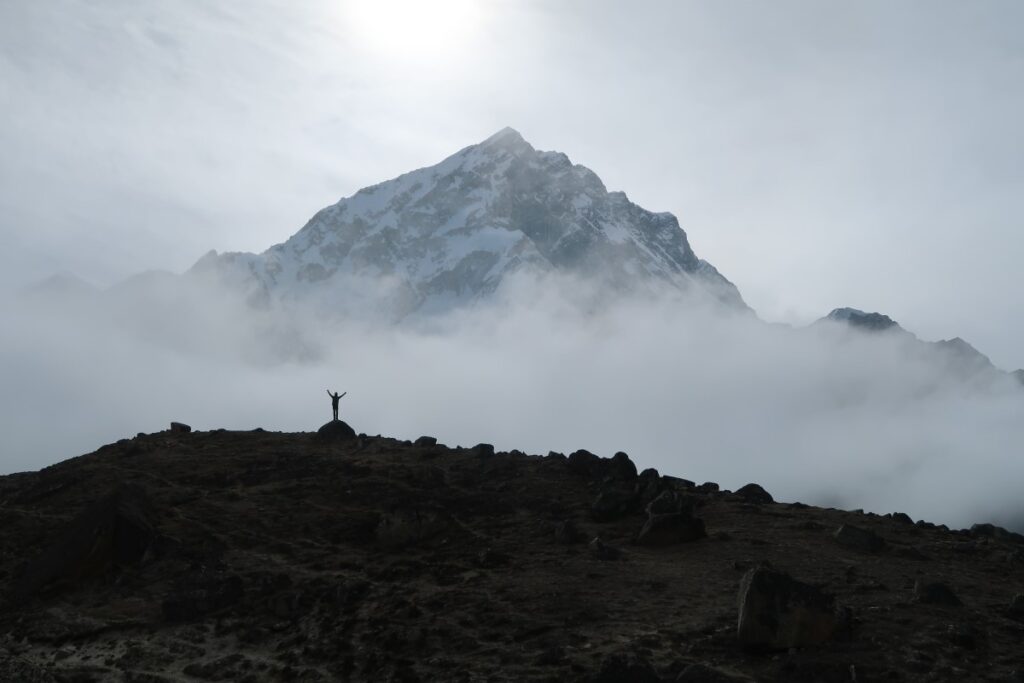
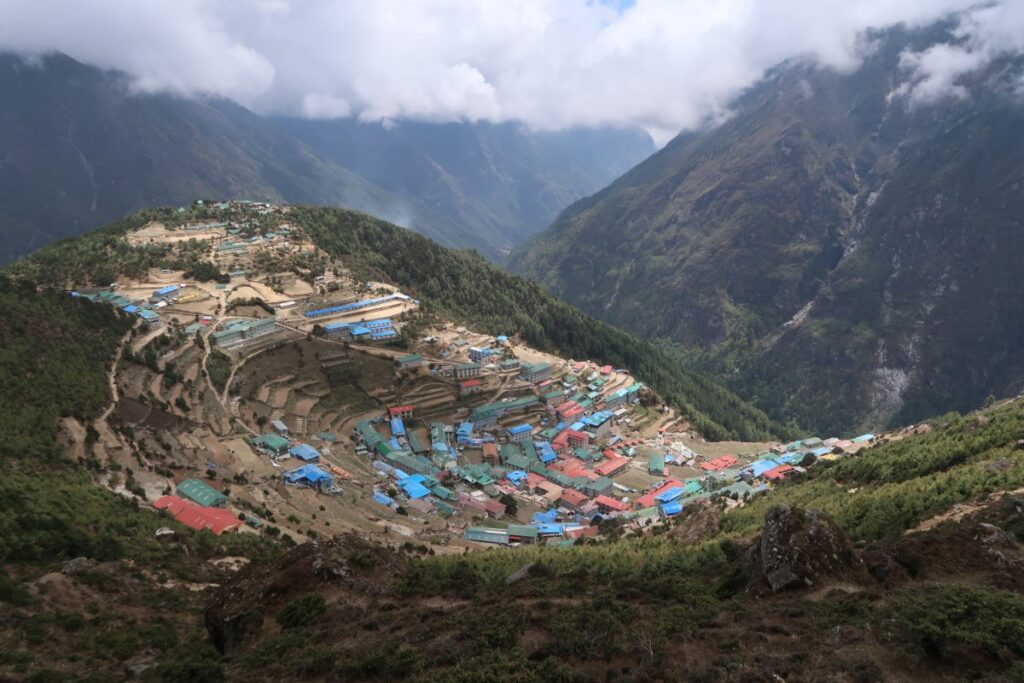
Walk slowly: This can be surprisingly difficult especially at the beginning of the trek, if you are in fairly good shape and used to hiking. Everyone is excited about the journey ahead, it’s still easy to breath and it’s inevitable that you compare your hiking speed with everyone around you. It is however very important that the increase in altitude happens very slowly and gradually to give your body enough time to start with the necessary adaption. I saw too many travelers already experiencing symptoms of high altitude sickness even before arriving in Namche Bazar.
Respect the acclimatization days: During the trek we had two acclimatization days, during which we stayed in the same village for a day and only did a short hike (approx. 500m of vertical gain). These days are very important for the acclimatization process, because you hike to a higher altitude and go back down to sleep at a lower altitude, which is very beneficial for the adaption.
Drink a lot of water: It is recommended to drink at least 3-4 liters of water or tea each day. This is not only very important during the acclimatization period but at higher altitude in general. The reason why you should drink so much liquid is on one hand the increased activity level and on the other the liquid we lose due to the heavier breathing. From my observations, many minor symptoms could already be relieved by adjusting to an adequate liquid intake.
Don’t sleep on your stomach: This I had to learn the hard way but I’m glad I did so early on. During the first 2-3 nights I slept on my stomach, as I usually do. During one night I had to get up to go to the bathroom and I nearly collapsed. This was very scary in the moment, since I never fainted before and I was afraid I was getting sick. After I collected myself, I realized fairly quickly that this happened probably due to lack of oxygen in my system. Sleeping on your stomach obstructs your breathing and this effect get’s much more noticeable in higher altitude. It is therefore often suggested to sleep at a small incline, to help your lungs. From that point on I started sleeping on my back or at least on my side and I never had the same issue again.
Some other (hopefully) useful tips for your own journey
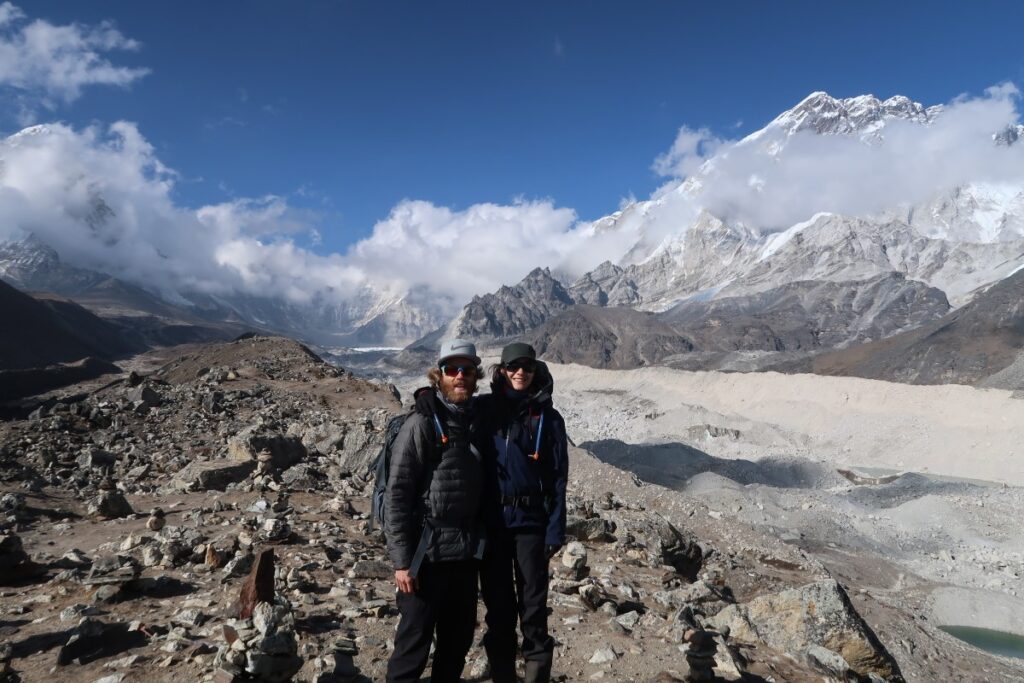
All in all I had a wonderful time trekking up to the Everest Base Camp and I wish everyone starting this journey to have positive experience. I have a few more tips for either preparing or to make your life easier during the trip.
Fitness: You don’t have to be an elite athlete to be able to complete this trek. Just take into consideration the “Nepali flat”. The description of the daily stages might only mention a vertical gain of 400m from where you’re starting an the altitude of the destination of that day. It might however not be apparent, that there could be over 1000m of up and down on the way. Therefore a daily stage could be much more demanding than you would expect at a first glance.
Walk on uneven surface: “Not flat” not only pertains to the general landscape but also to the surface of the hiking trails. As already mentioned, the trails in general are very well maintained and therefore fairly easy to walk on however it is NOT a smooth surface. Seems to be quite obvious that trails will not be perfectly smooth in the Himalayas, but again many fellow travelers found themselves in a lot of pain because of this. If your feet and ankles are not used to uneven surface, you will feel it very soon and I highly recommend to find some rocky trails to train on before the trip. Two weeks are a long time to be in pain.
Get your liquids in by 6pm: As mentioned above, you are well advised to drink enough liquids. I highly recommend to set yourself mini targets throughout the day to make sure you spread the intake evenly. This way you can stop drinking liquids at around 6pm which helps minimize the chance of having to get up during the night, which is just not the most pleasant thing to do (leaving a warm sleeping bag to find the common toilet).
Is this trekking the right choice for me – final thoughts
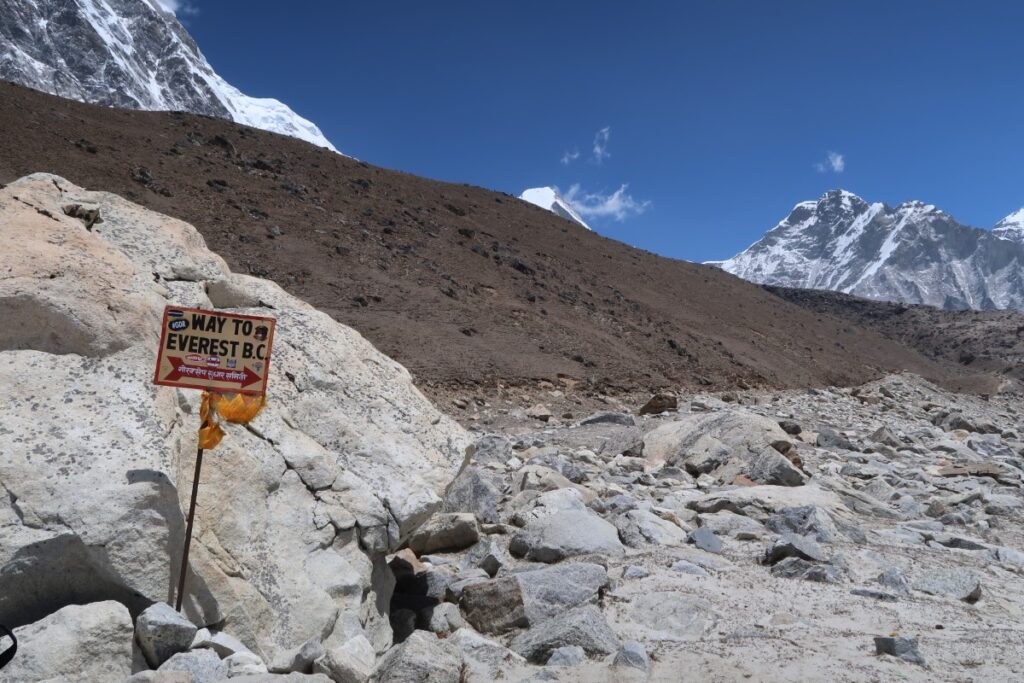
If you like hiking, enjoy being out in nature and looking at beautiful mountains, yes! If your main goal is, to be at the Everest Base Camp, you will be disappointed. The camp is just tents on a large moraine and no, you can’t see Mount Everest from the base camp. Even though it is marketed that way, the base camp is definitely not the highlight of the trip.
Again it’s not my place to judge anyone’s reasons for going on this journey, but it helps to realize that the trekking does not end at the Everest Base Camp. You will have to walk all the way back to Lukla, which will be faster since you don’t have to acclimatize anymore, but it’s not only going downhill (remember “Nepali flat”). I think this realization sunk in with many of my fellow travelers only the day after we visited the base camp and it discouraged some to the point, where they could not enjoy the rest of the trip anymore.
I only saw a very small piece of Nepal during this trip, but it was such an incredible experience that we knew right away, that we had to come back.